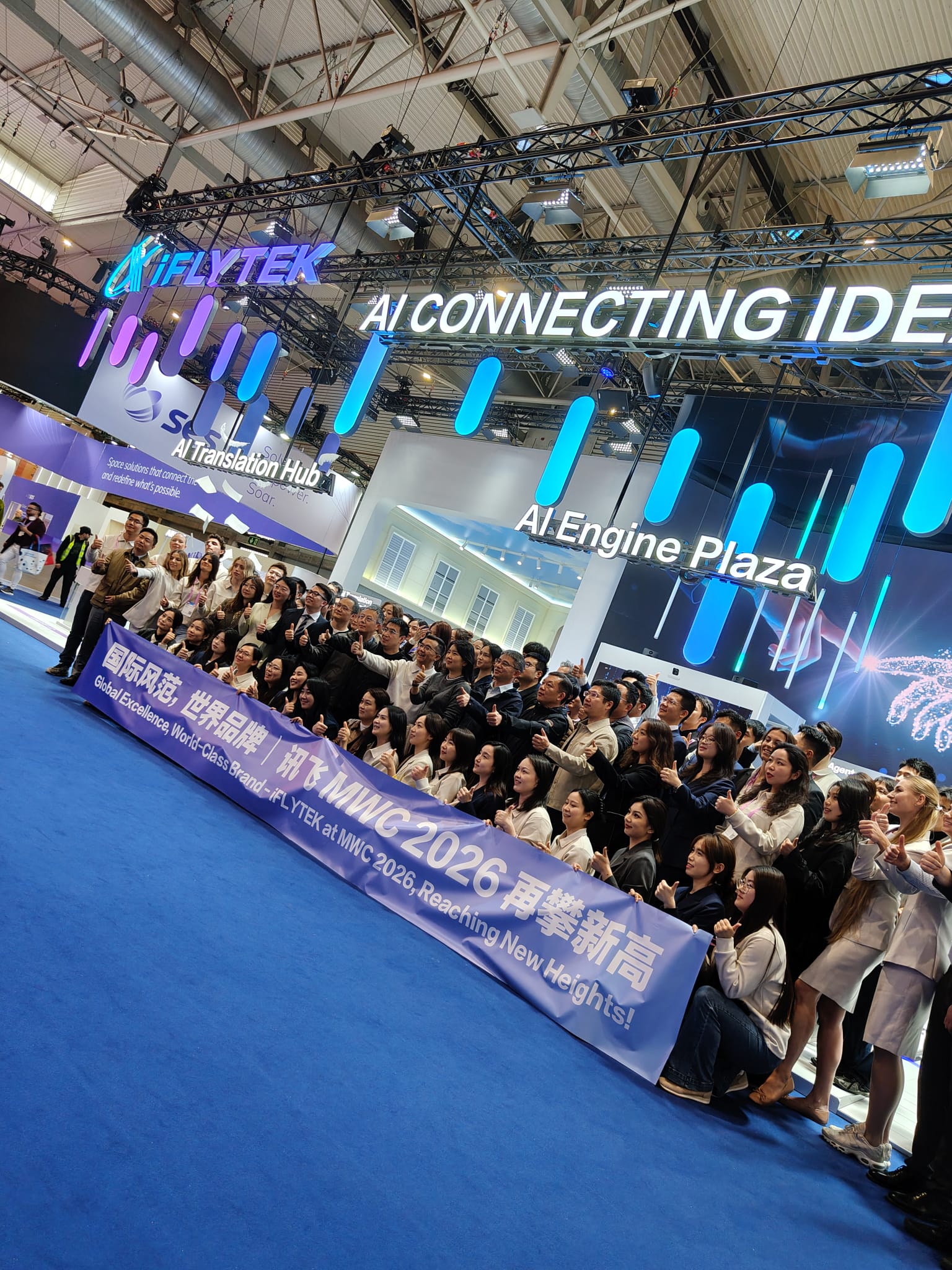
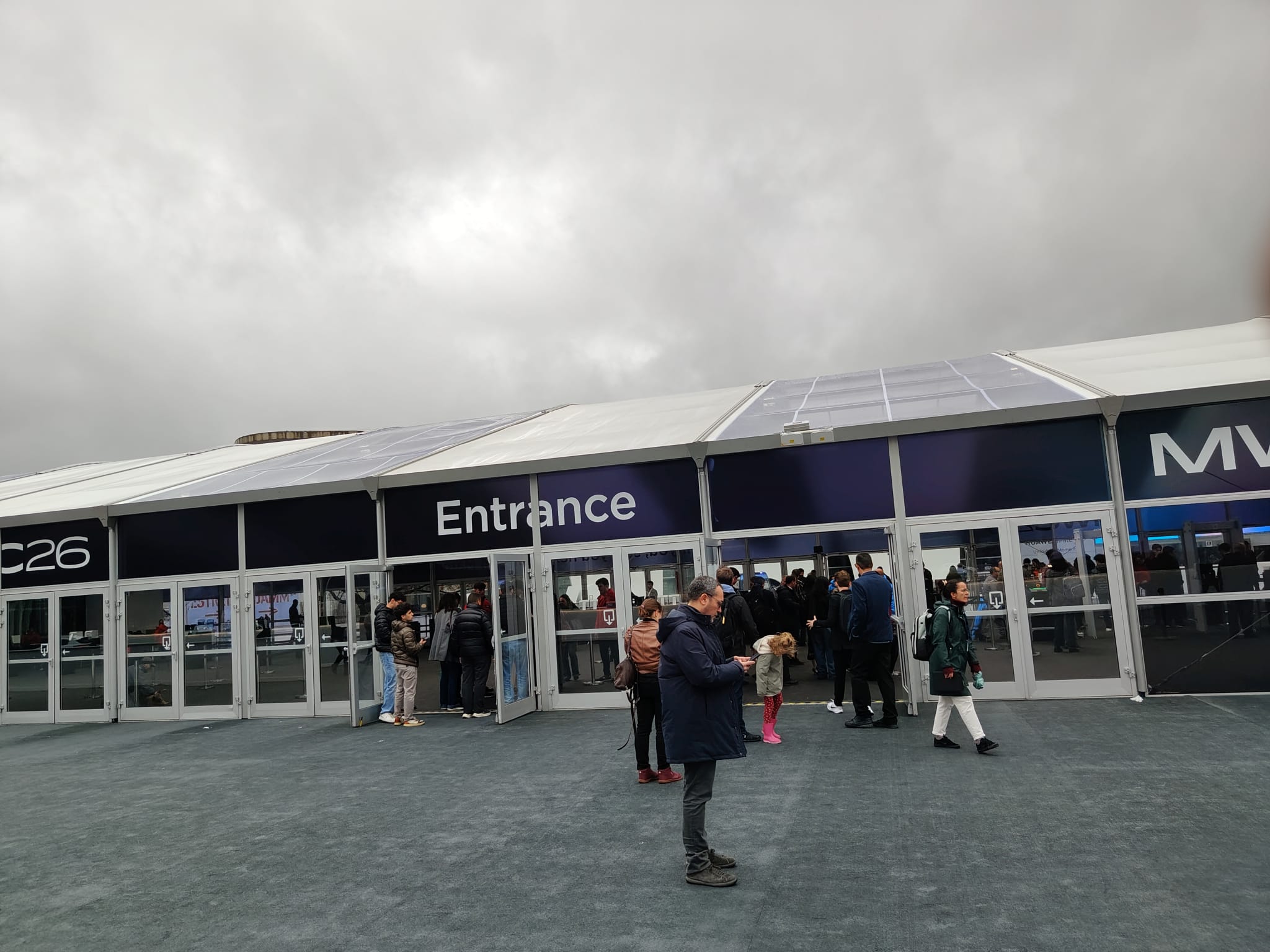
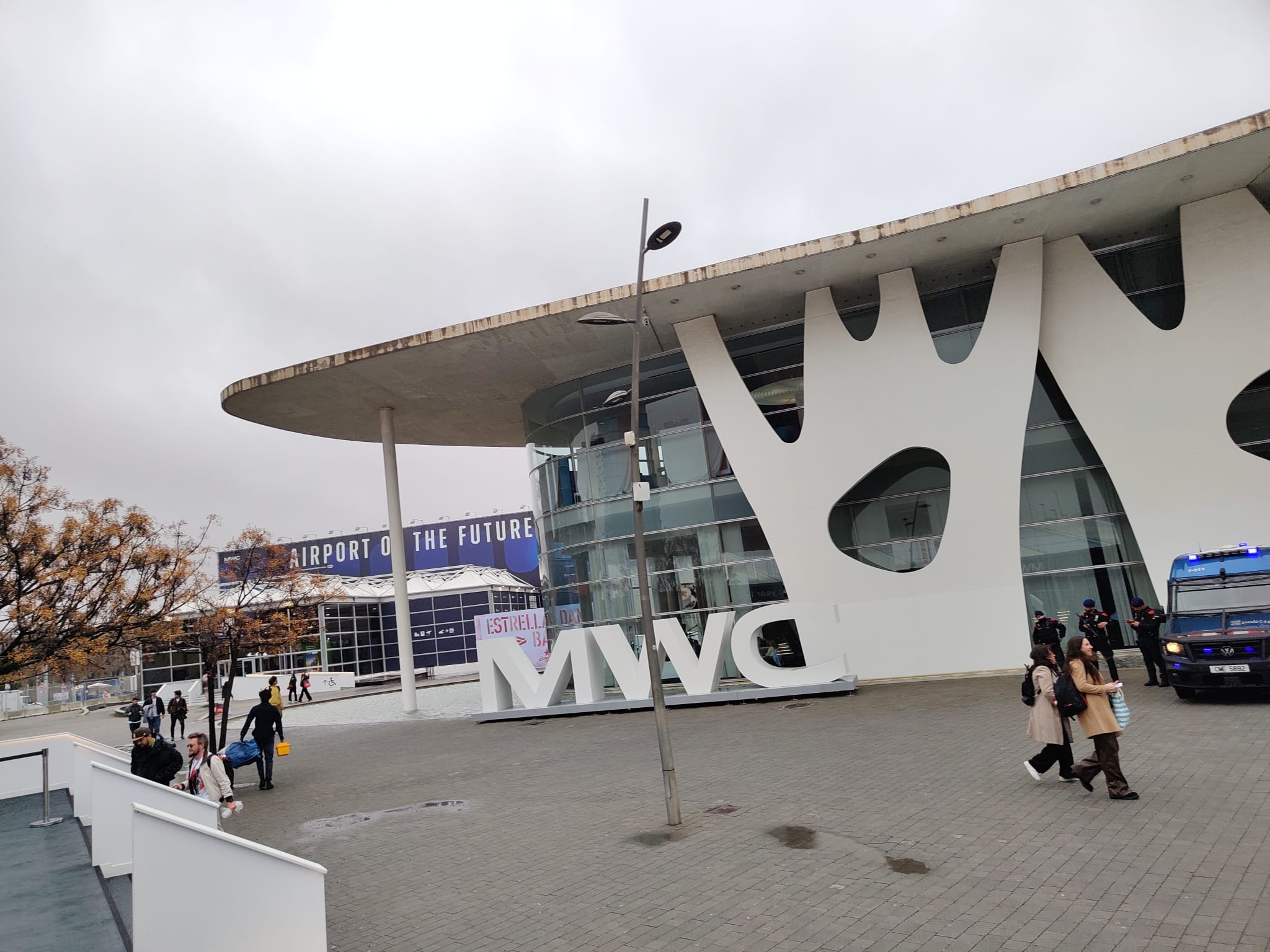
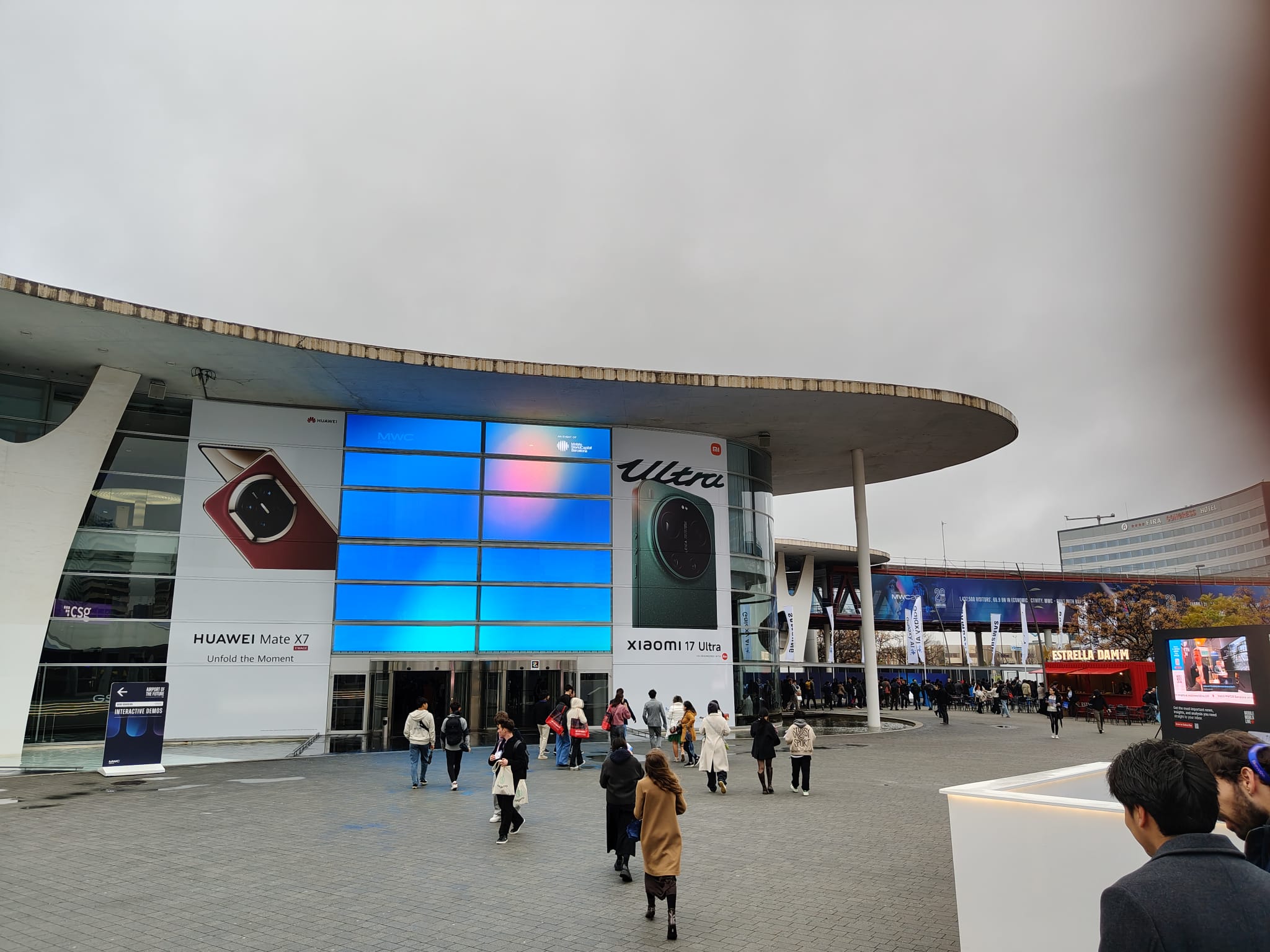
Arrival
Halls
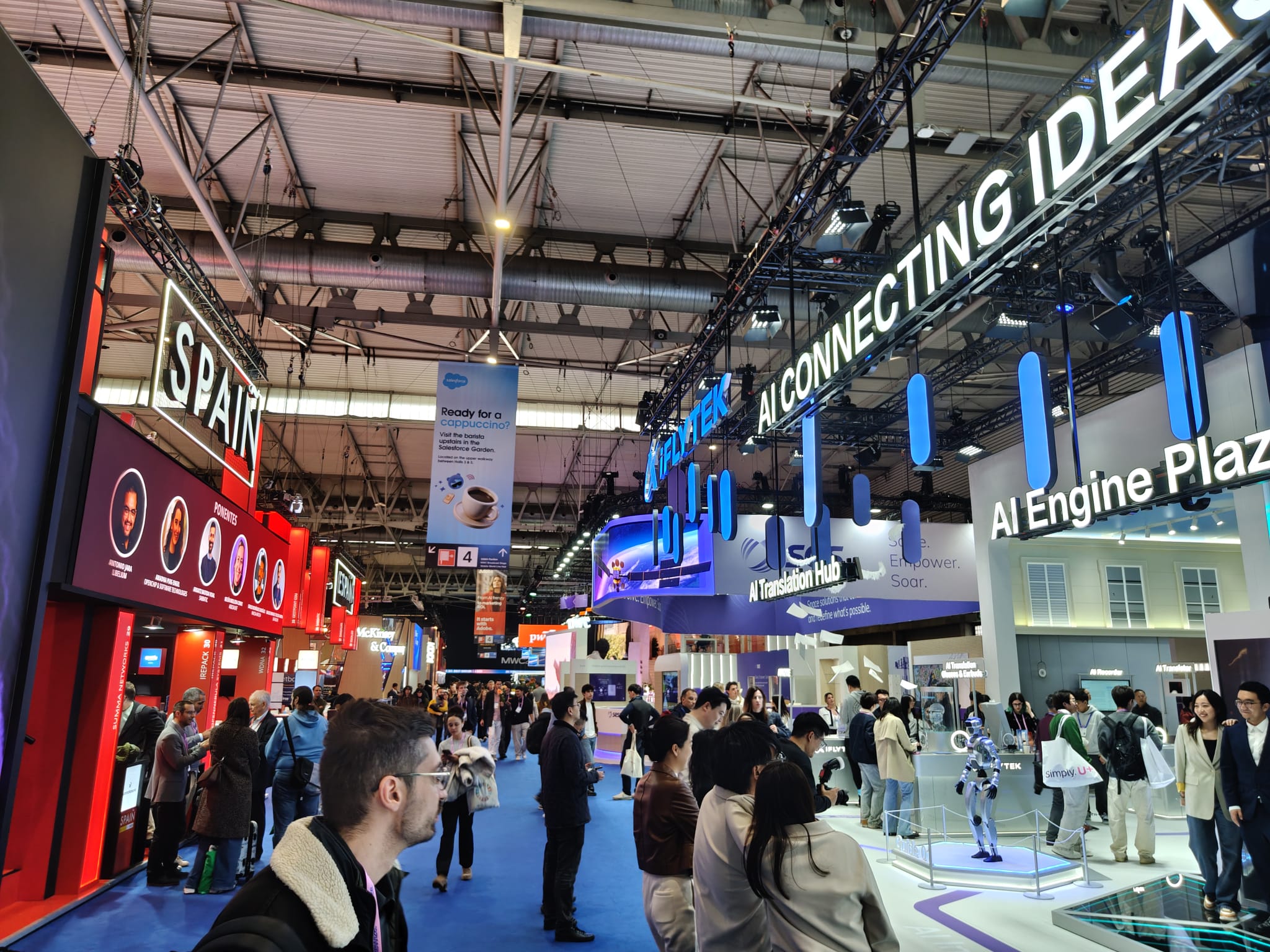
There were four halls, each with a clear role:
- Direct contact with devs and managers — One hall was set up for talking straight to developers or managers from companies showing a new product (e.g. an app). Focus on one product, one story.
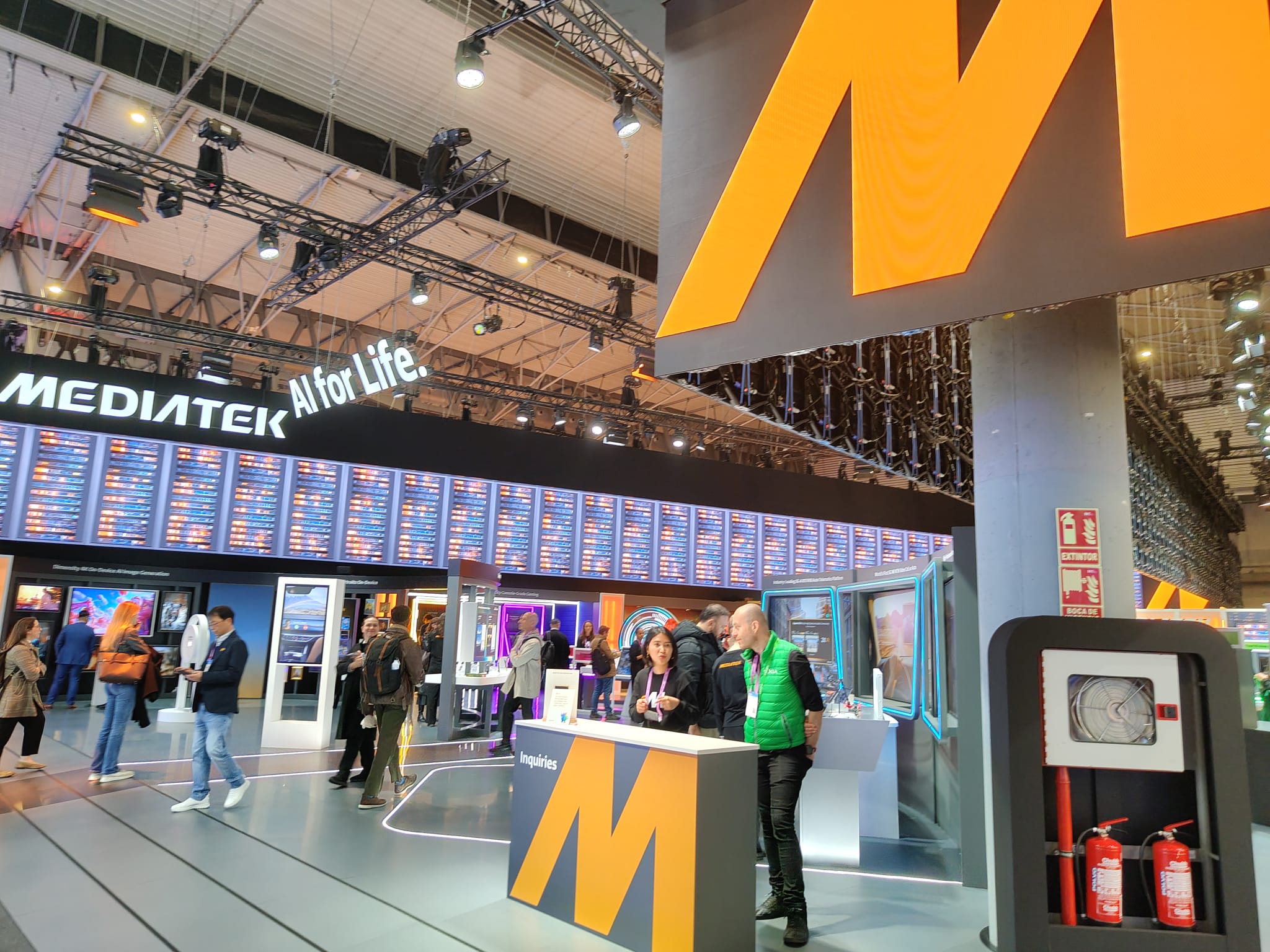
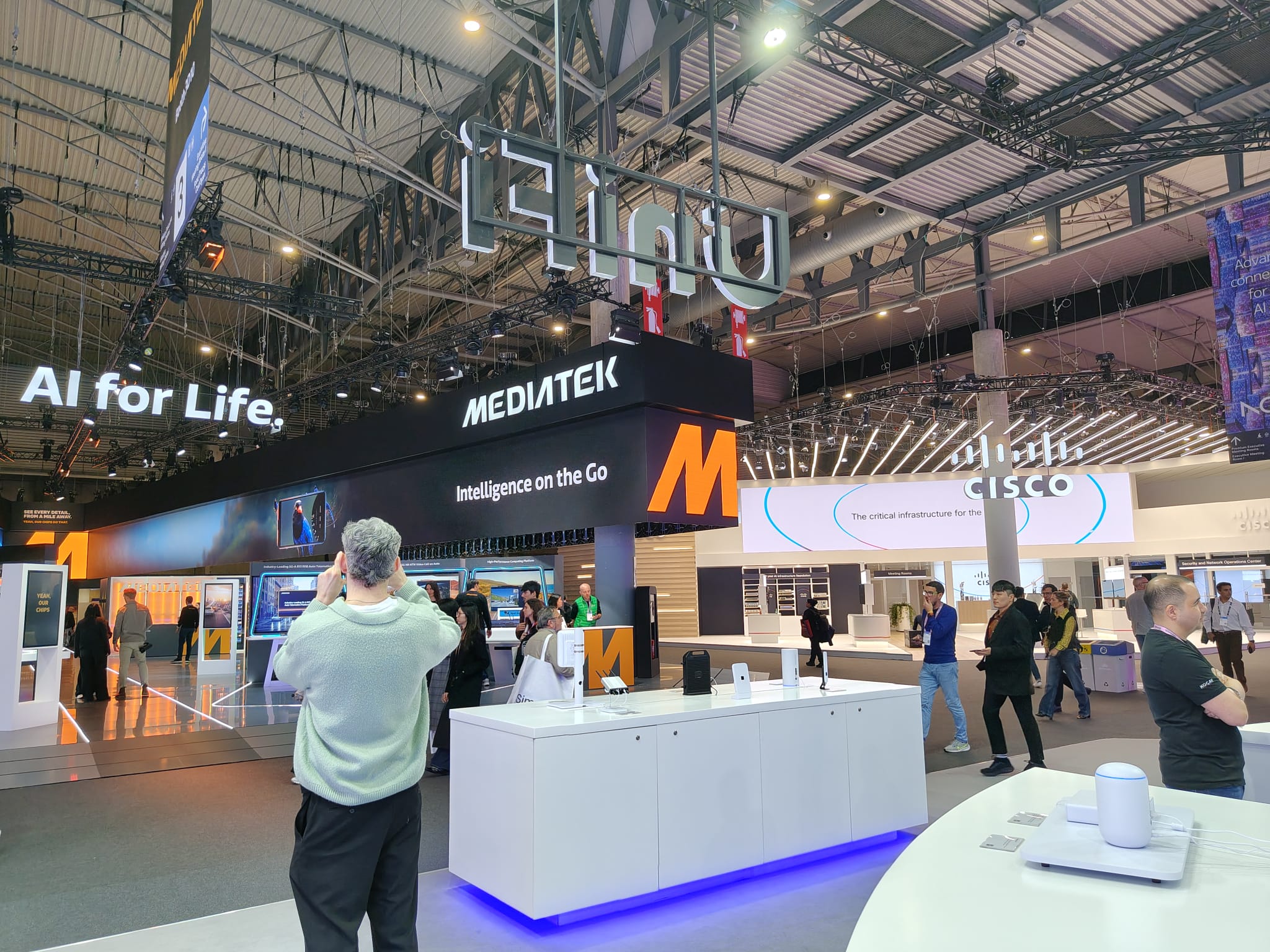
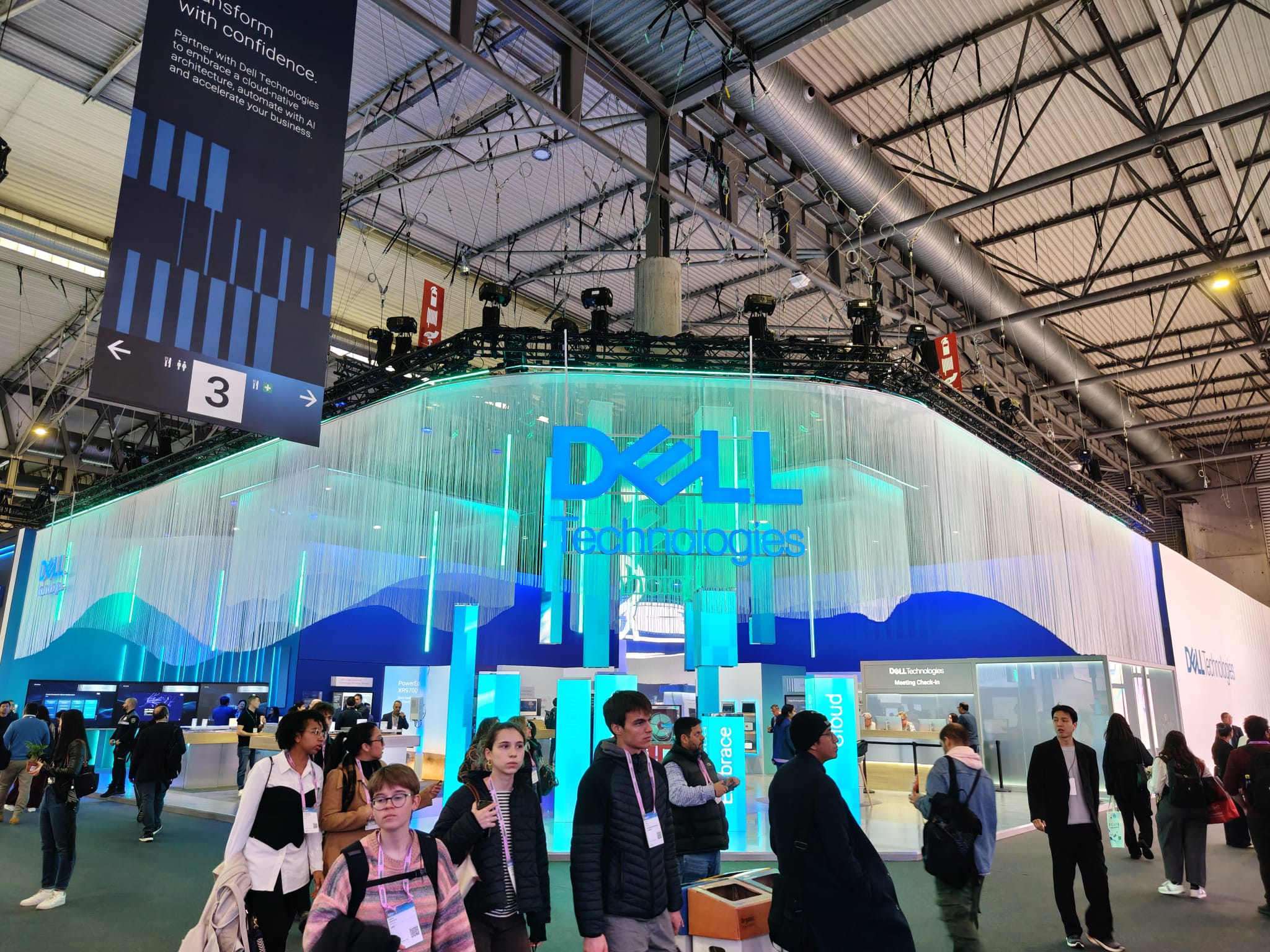
- Big-name companies, broad offering — Another hall featured very large companies showing a bit of everything: software, hardware, robots, live demos, etc.
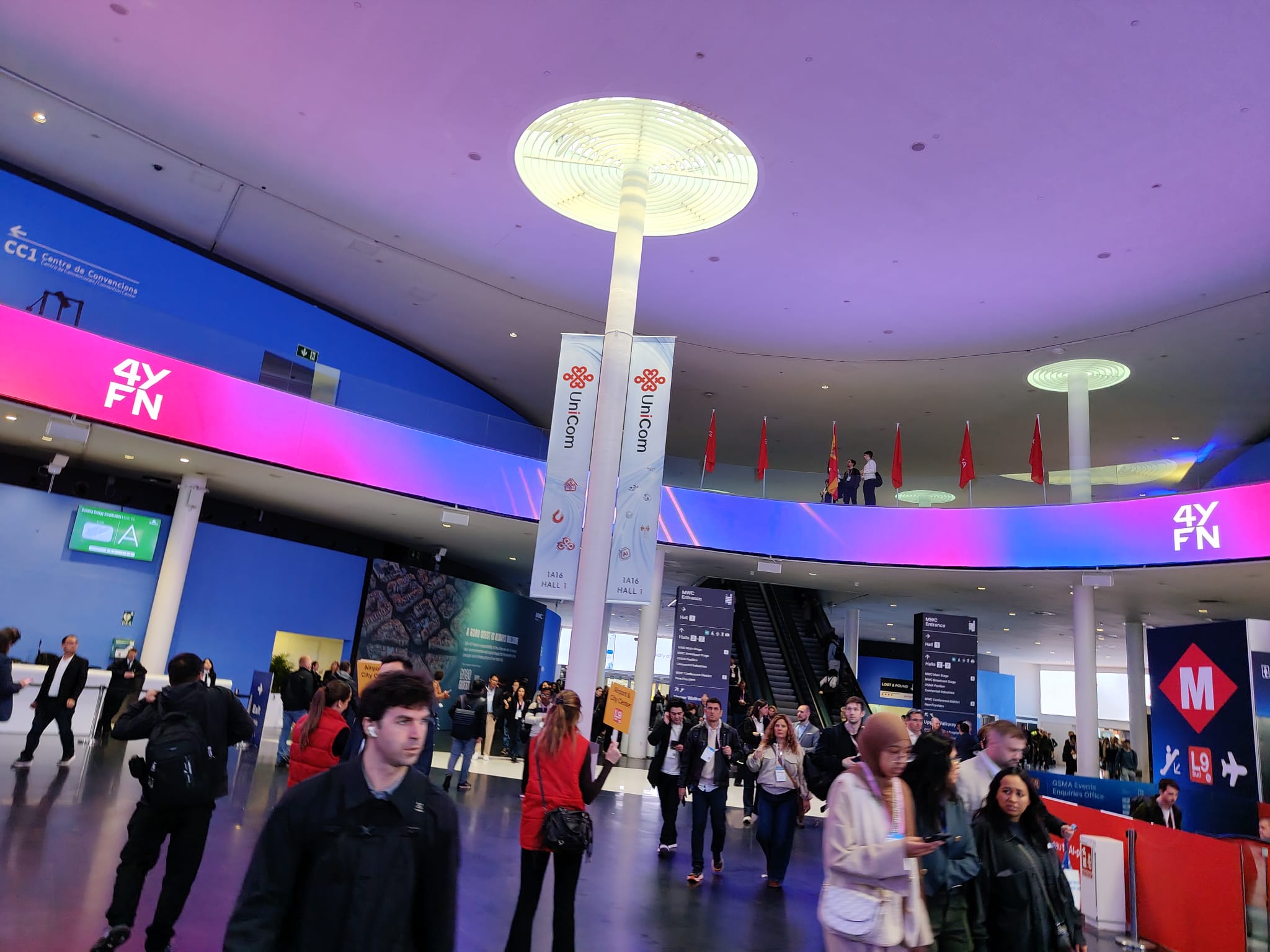
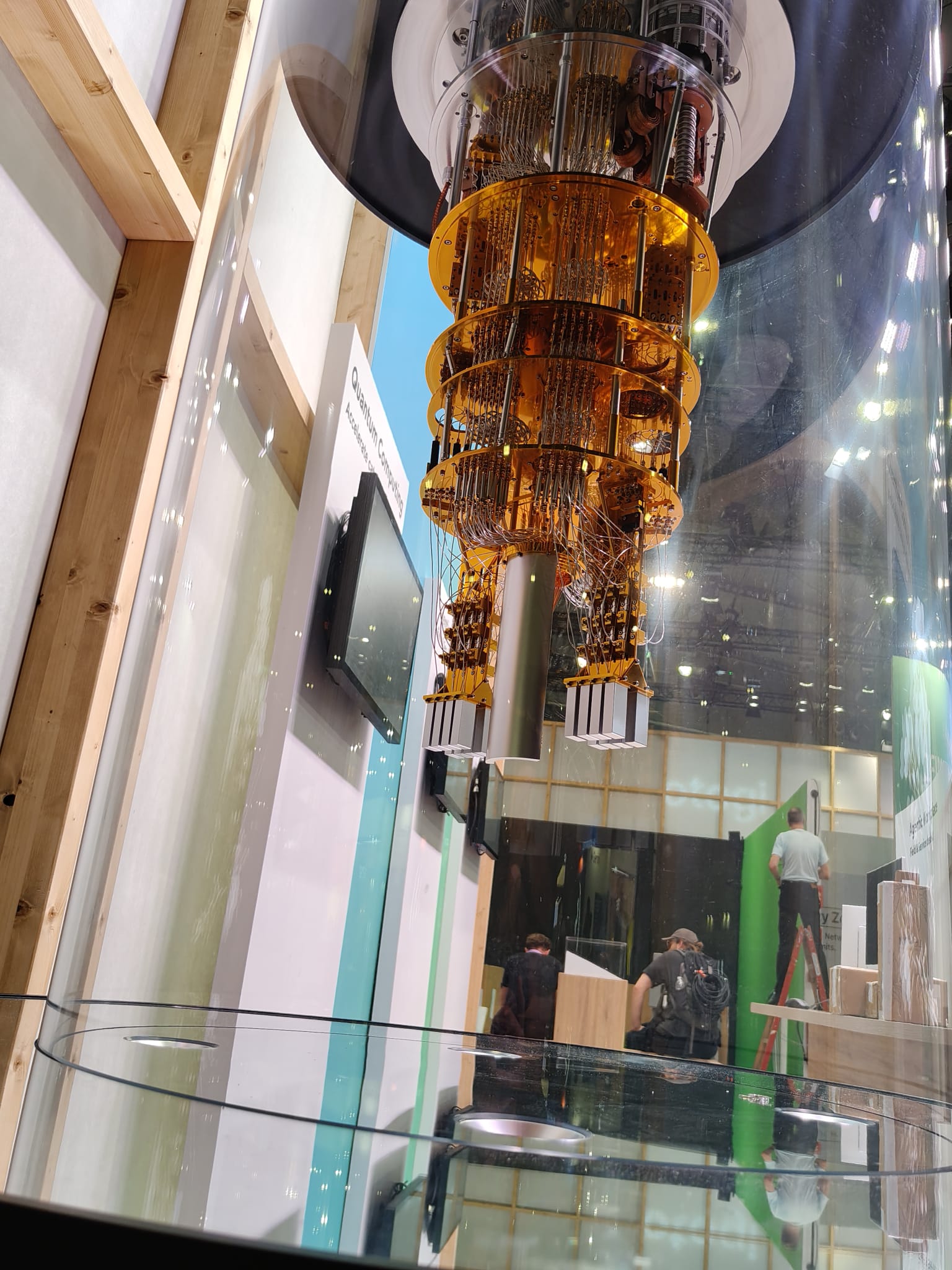
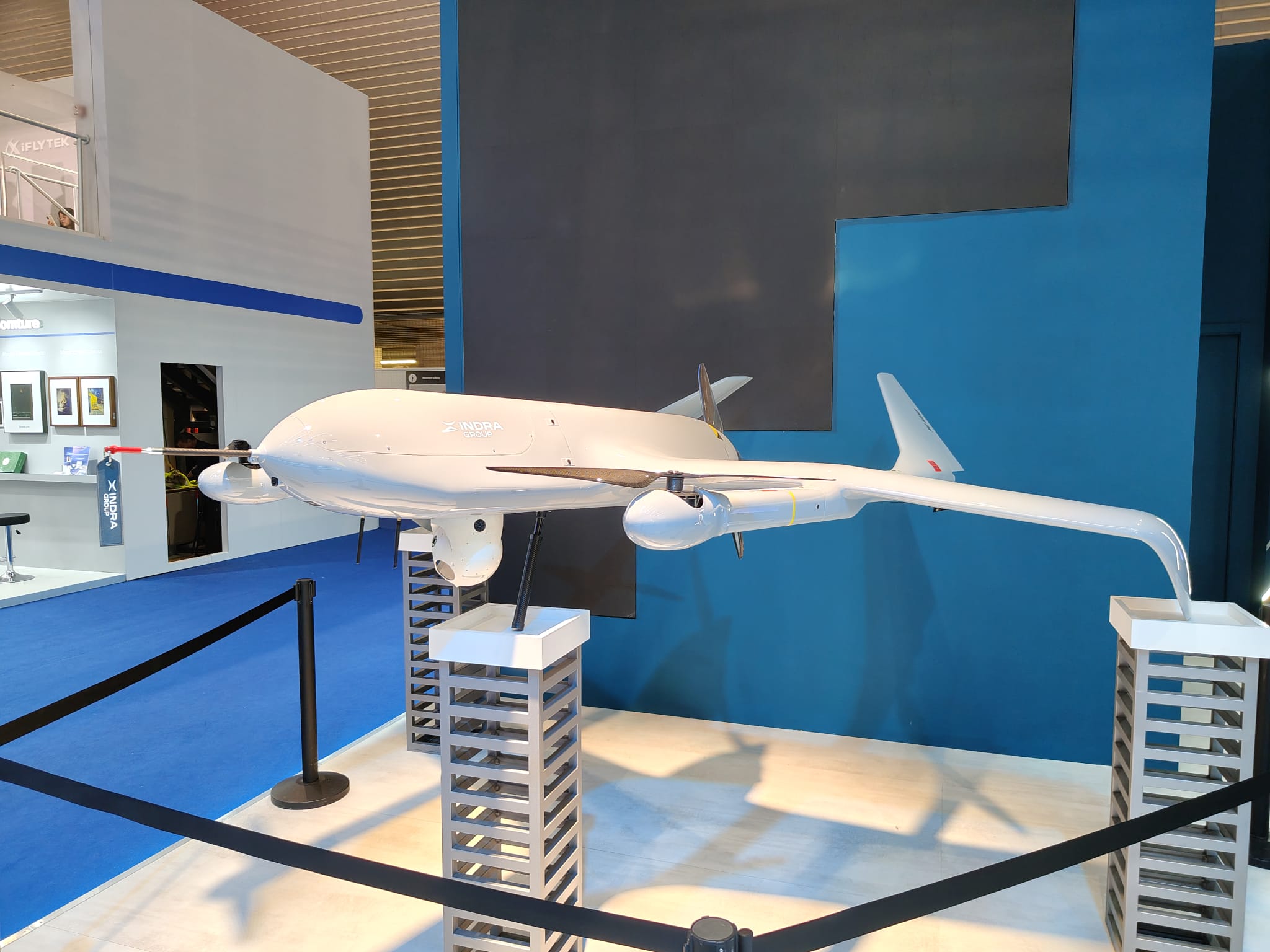
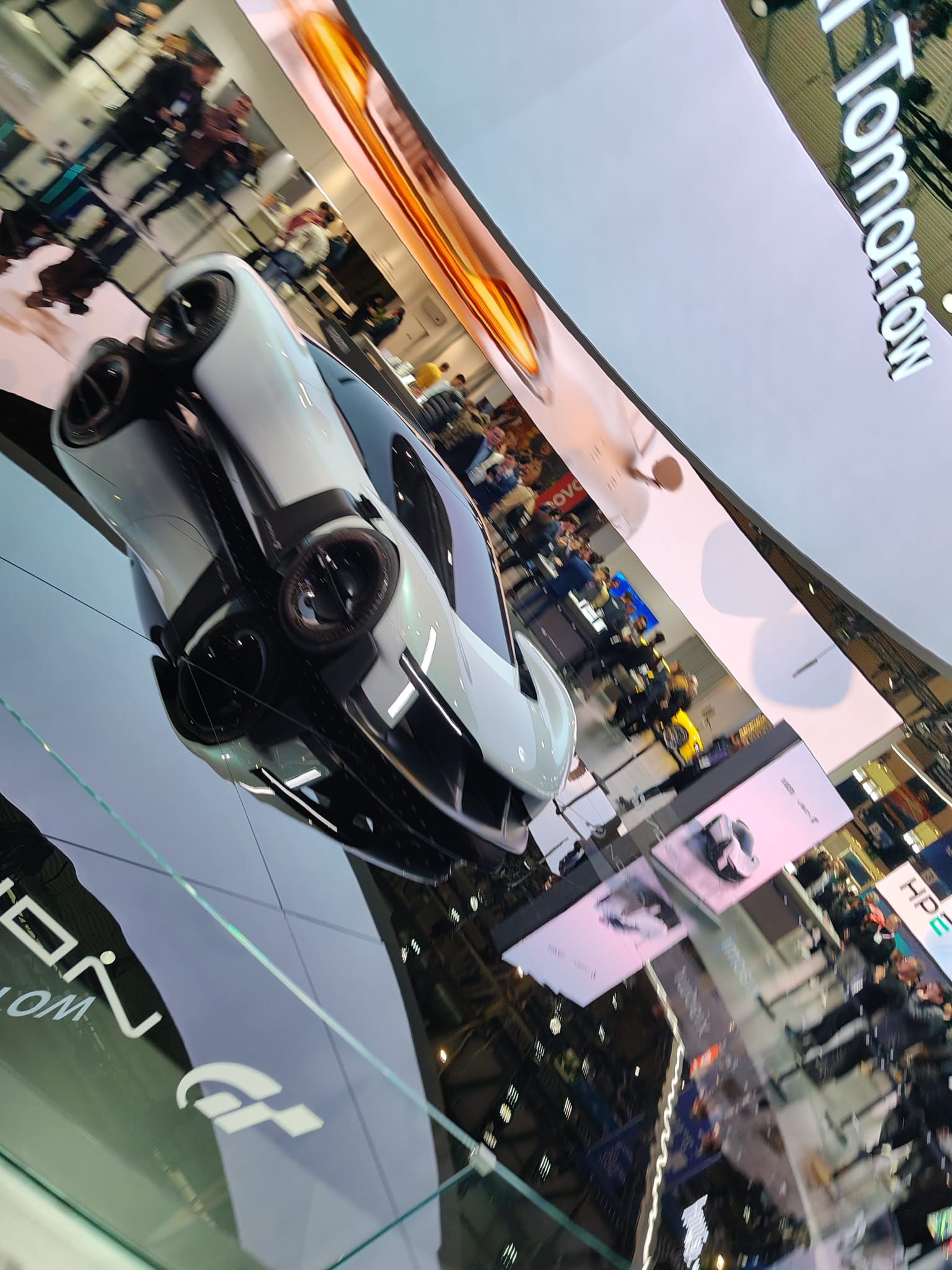
- Lesser-known companies, stronger stands — A third hall had companies that weren't as well known, but the stands were often better than in the previous one: more staff, more things to see and try, and more going on in general.
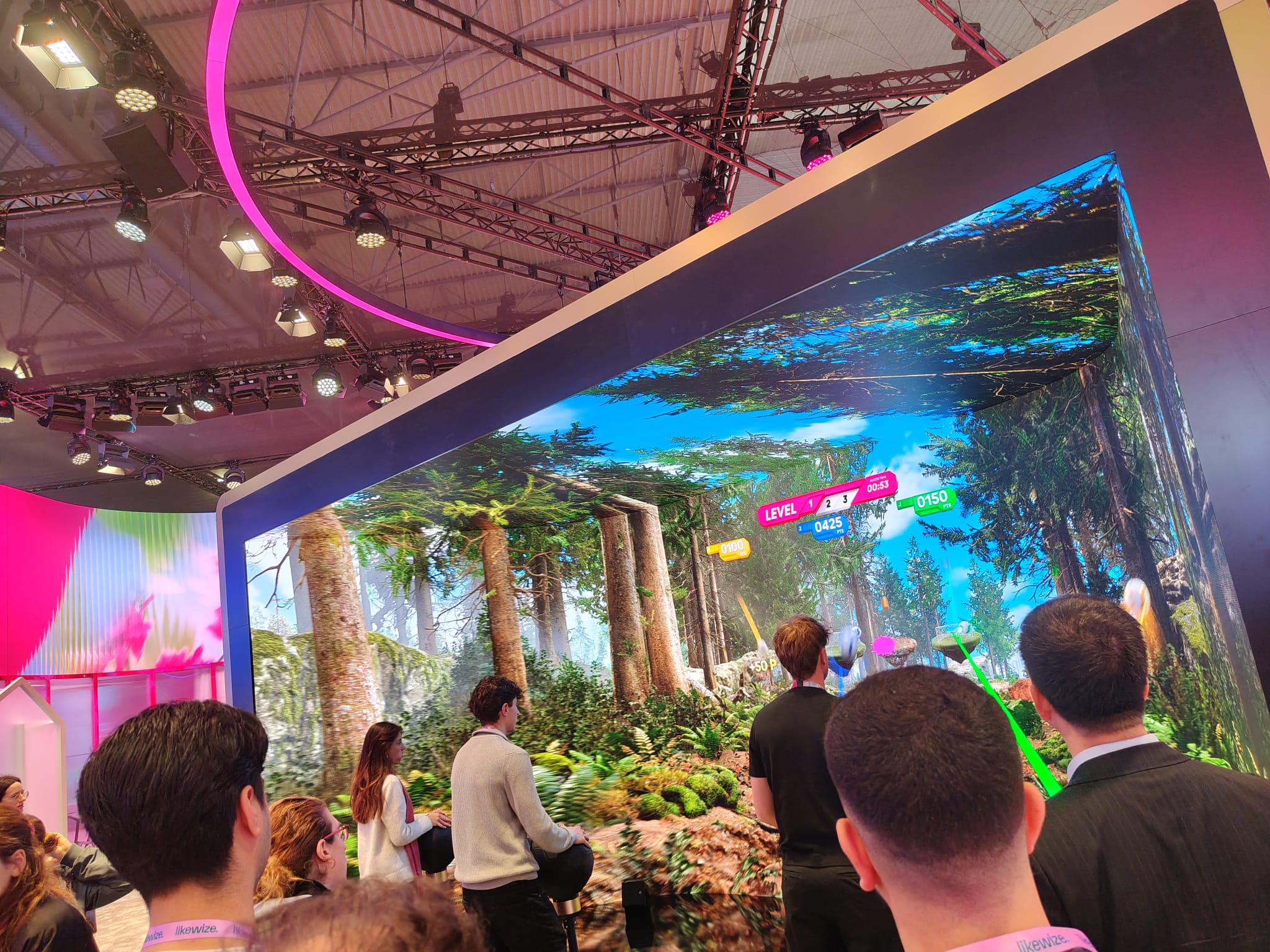
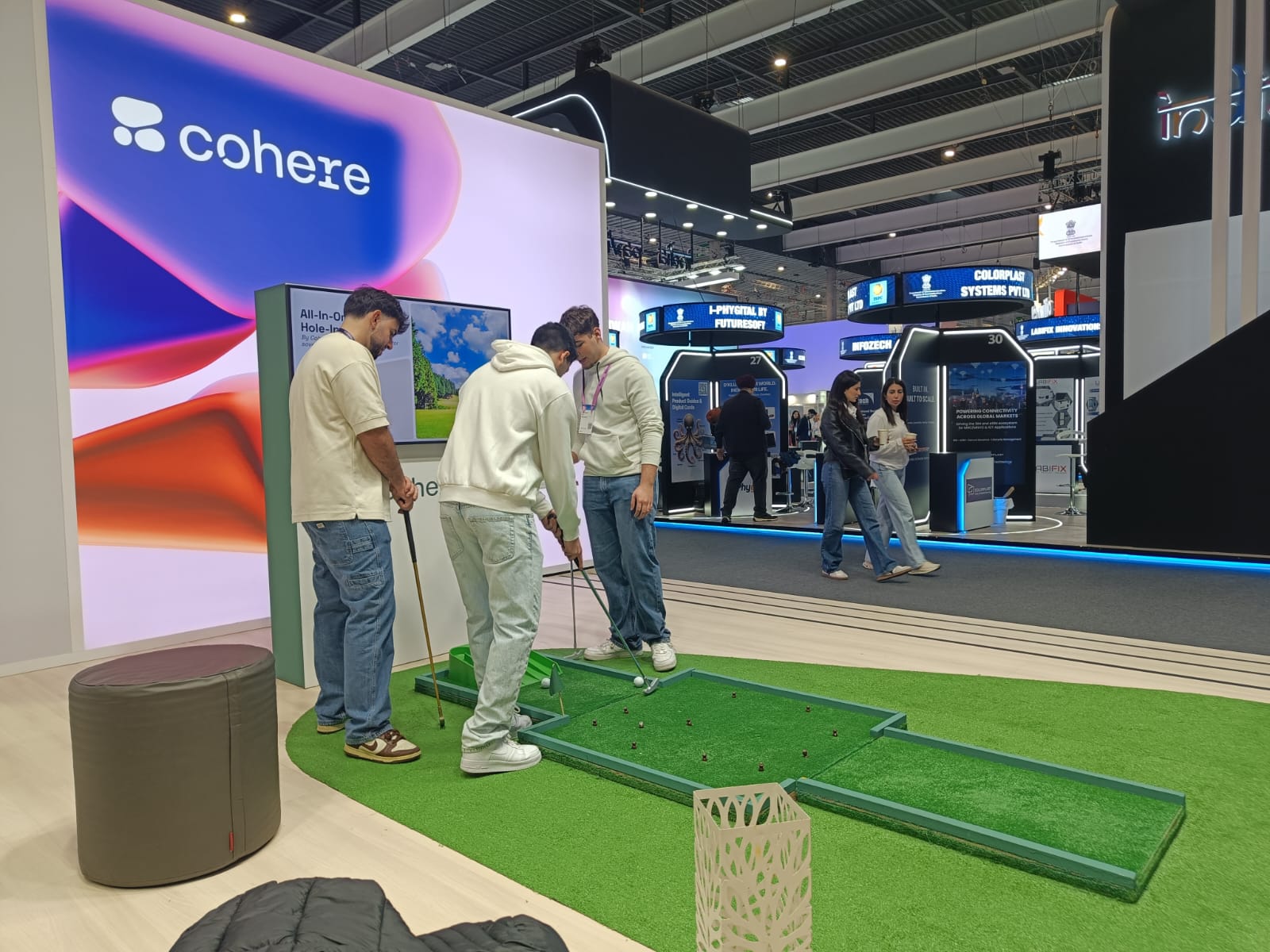
- Meetings, informal talks, demos and games — A fourth hall was more geared to meetings, informal chats, and demos or games (AR, VR, etc.).
Stands
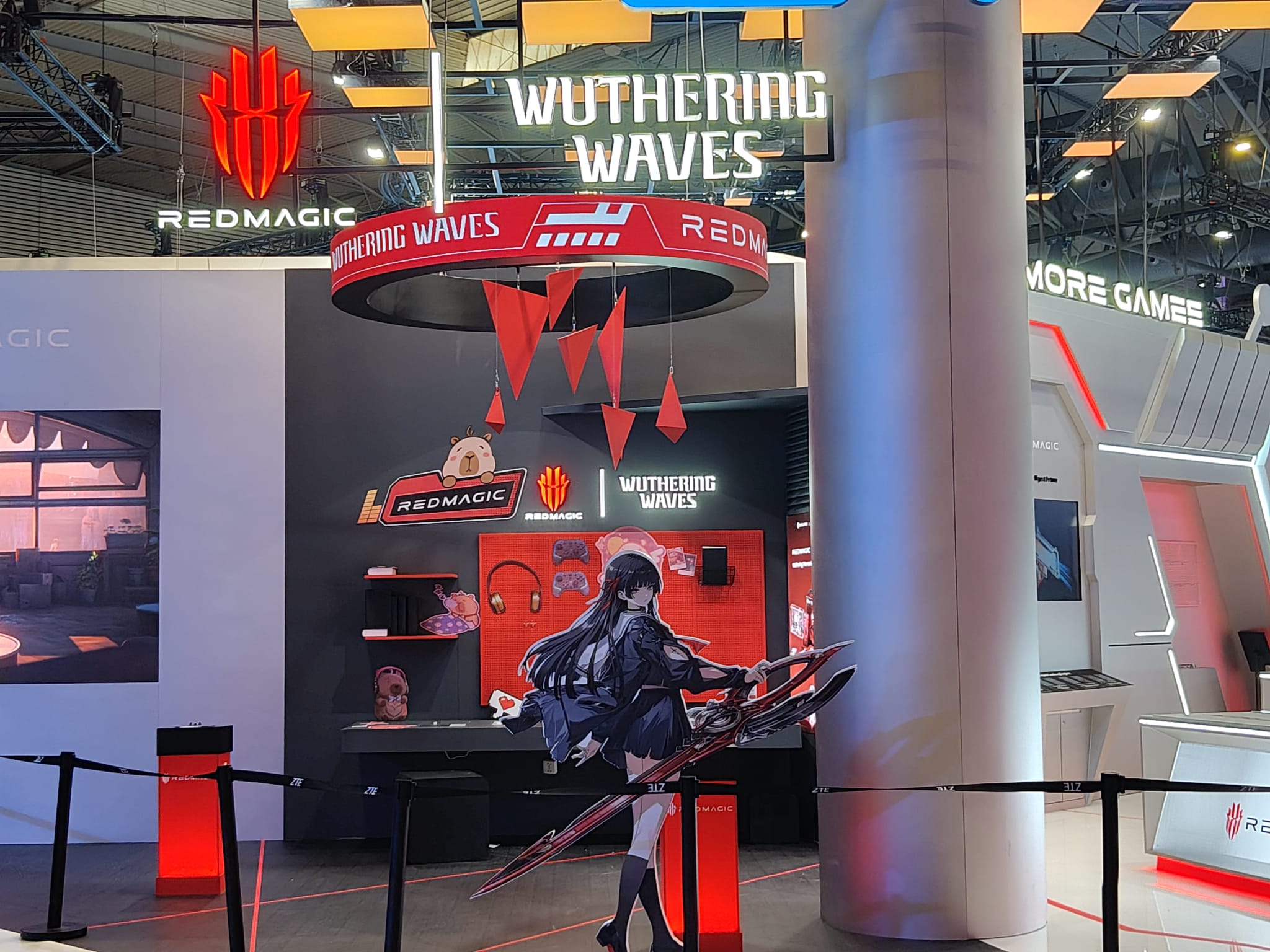
The term AI was everywhere — on every stand and in every pitch. Across all stands, regardless of hall, the pattern was the same: presentations were 100% made with AI. Several people also admitted that their application relied heavily on AI — but built and guided by experts in that product or domain.
Several stands were selling anti–scam call solutions; one stand was dedicated entirely to that.
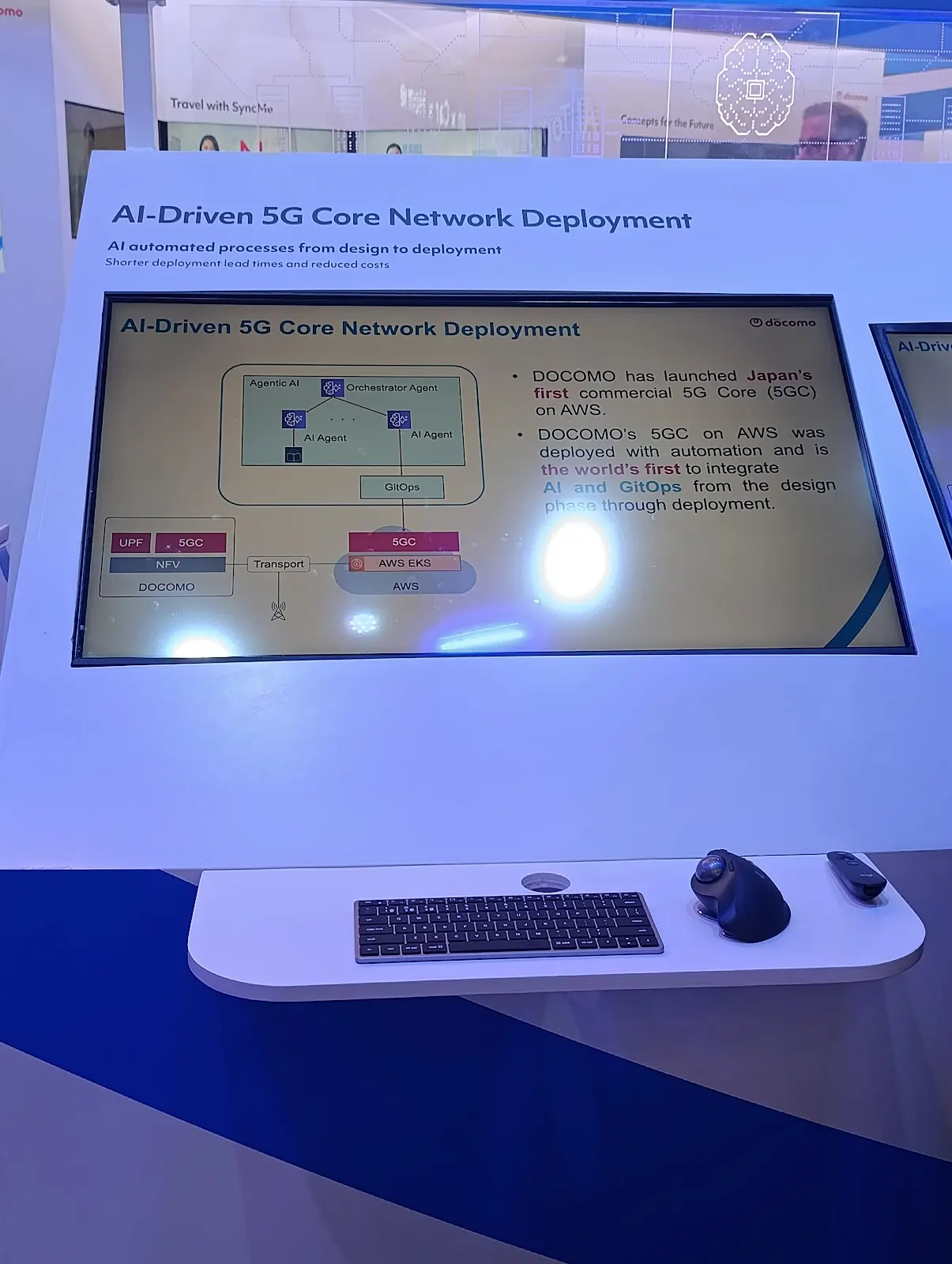
NTT Docomo: 5G core on AWS
Simple explanation: NTT Docomo deployed the core of its 5G network in the AWS cloud and uses AI to automatically manage and deploy it.
Even simpler: Instead of engineers manually configuring the network, AI and automation handle it in the cloud.
What the diagram shows:
- AI agents make decisions and control the system.
- An orchestrator coordinates everything.
- GitOps is used to automatically deploy changes.
- The system runs on AWS using Kubernetes (EKS).
What they are claiming: They say this is the first commercial 5G core that integrates AI and GitOps from the design phase all the way to deployment.
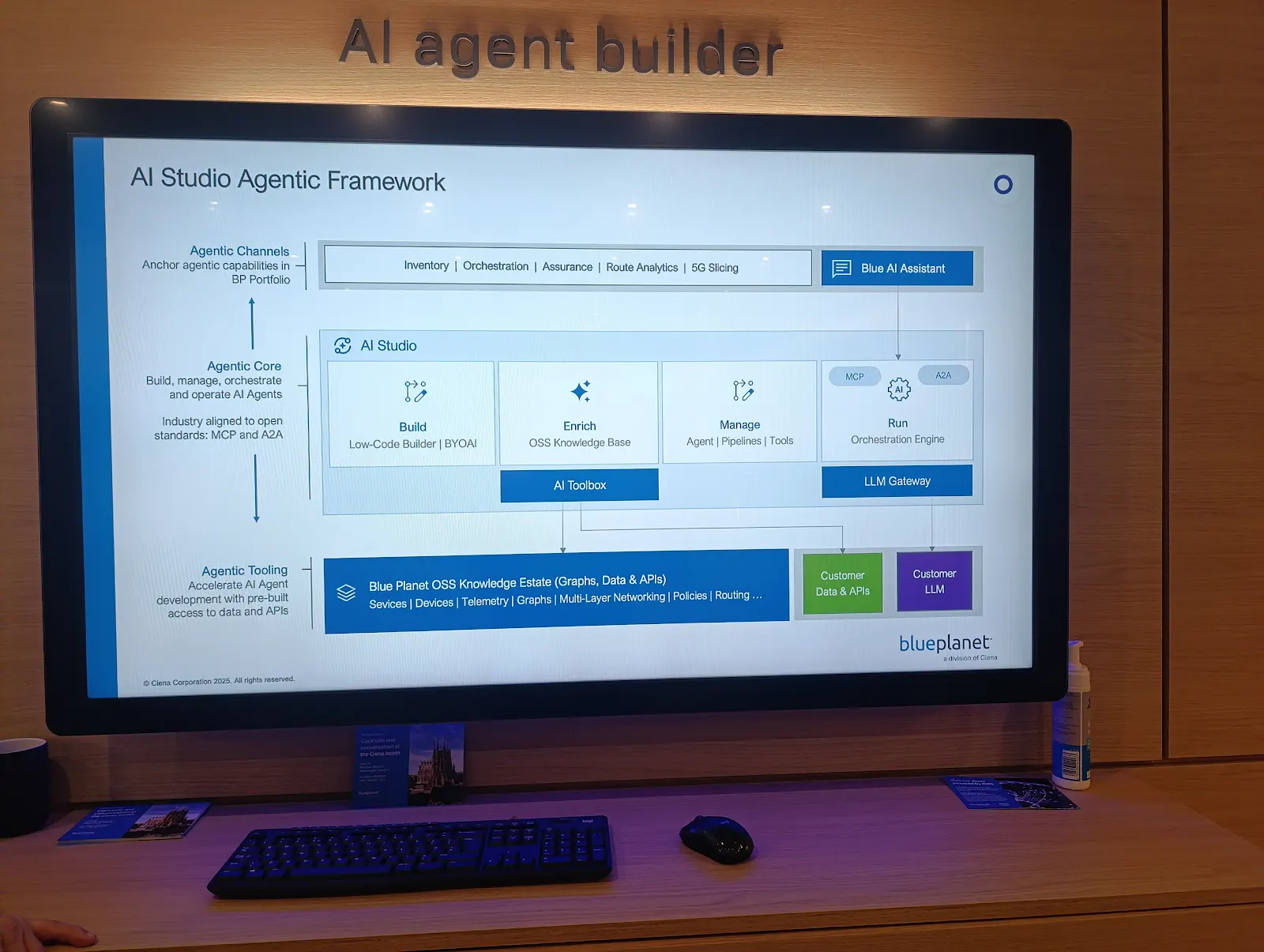
AI Studio Ciena (Blue Planet)
Simple explanation: This diagram shows a platform called AI Studio that helps companies build, manage, and run AI agents to automate telecom network operations.
Even simpler: It is a system where you can create AI agents that help run and manage telecom networks automatically.
What the diagram shows:
- Build: Tools to create AI agents (low-code or bring your own AI).
- Enrich: A knowledge base with telecom data and information.
- Manage: Pipelines and tools to control and organize the agents.
- Run: An orchestration engine that executes the agents.
Data and tools: The AI agents use:
- Network data (devices, telemetry, routing, policies).
- Customer data and APIs.
- External LLMs (large language models).
What the platform is for: It helps telecom companies automate tasks like:
- Network orchestration
- Monitoring and assurance
- Route analytics
- 5G network slicing
Nokia (Ruckus)
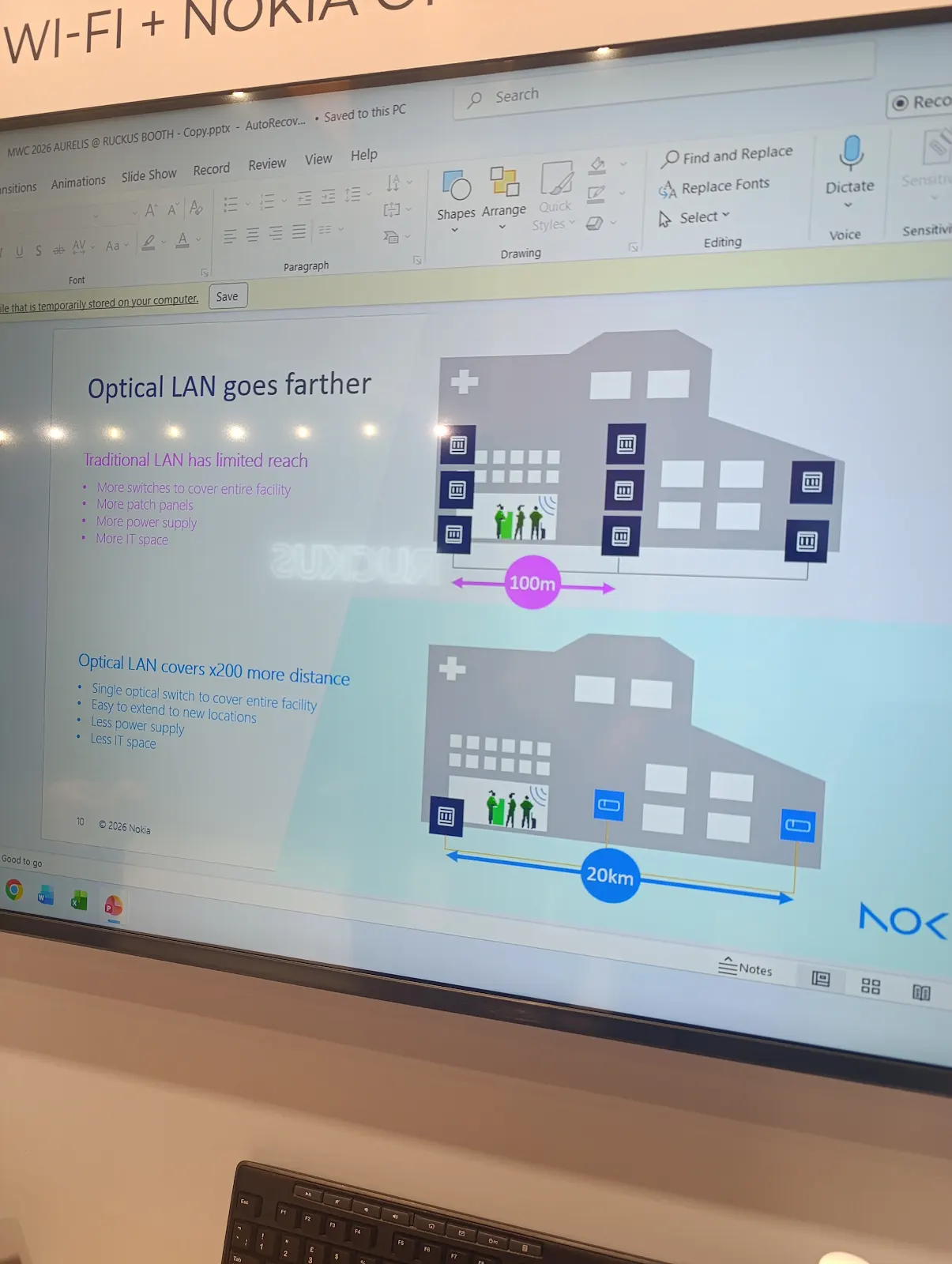
Simple explanation: This slide explains how Optical LAN technology from Nokia can extend network coverage compared to traditional LAN, and how it can work together with Ruckus Wi-Fi networks.
Even simpler: Traditional Ethernet networks can only reach about 100 meters, while Optical LAN (fiber) can reach up to 20 km.
What the diagram shows:
- Traditional LAN
- Limited distance (~100 m)
- Requires many switches across the building
- Needs more power and equipment
- Uses more IT space
- Optical LAN
- Much longer distance (up to ~20 km)
- Fewer switches needed
- Easier to extend to new locations
- Uses less power and infrastructure
What they are claiming: Using Nokia Optical LAN with Ruckus Wi-Fi allows networks to cover larger buildings or campuses with fewer devices, lower power consumption, and simpler infrastructure.
People
One conversation stood out: a Microsoft worker focused on autonetworking (automation/networking). He didn't give much time or hope to juniors, and said that if he were a junior today, he would switch to something else — meaning another field of study and another kind of job.